
الأرضيات المصنّعة مقابل الأرضيات الخشبية الصلبة: ما هو الأنسب لمشروعك؟

Solid wood and engineered wood flooring can look remarkably similar once installed. Both offer a genuine wood surface, natural grain and a wide choice of colours and finishes. The difference lies beneath the surface—and that difference matters when specifying flooring for a residential or commercial project.
Choosing between them starts with understanding the installation environment, maintenance expectations and required construction.
What Is the Difference?
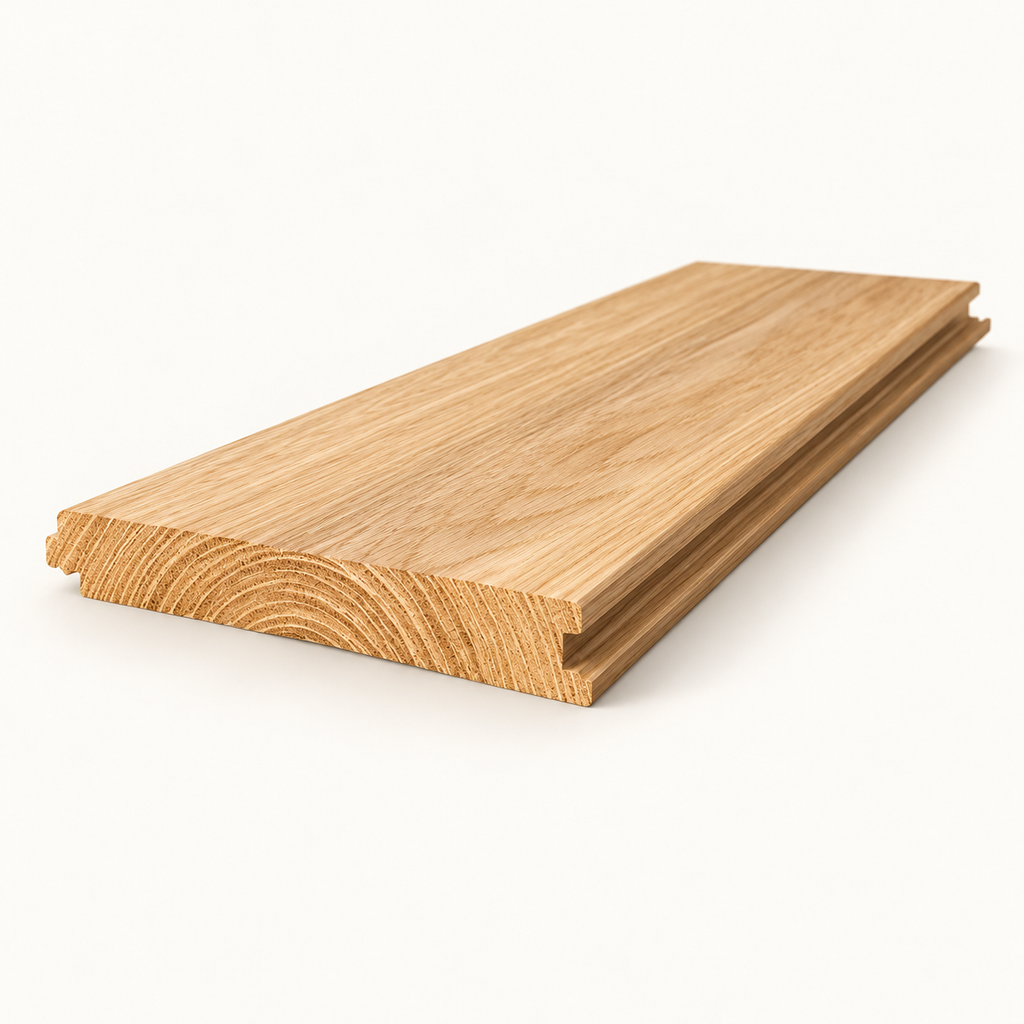
أرضيات خشبية صلبة is machined from a single piece of timber. The same wood species runs through the full thickness of the board.
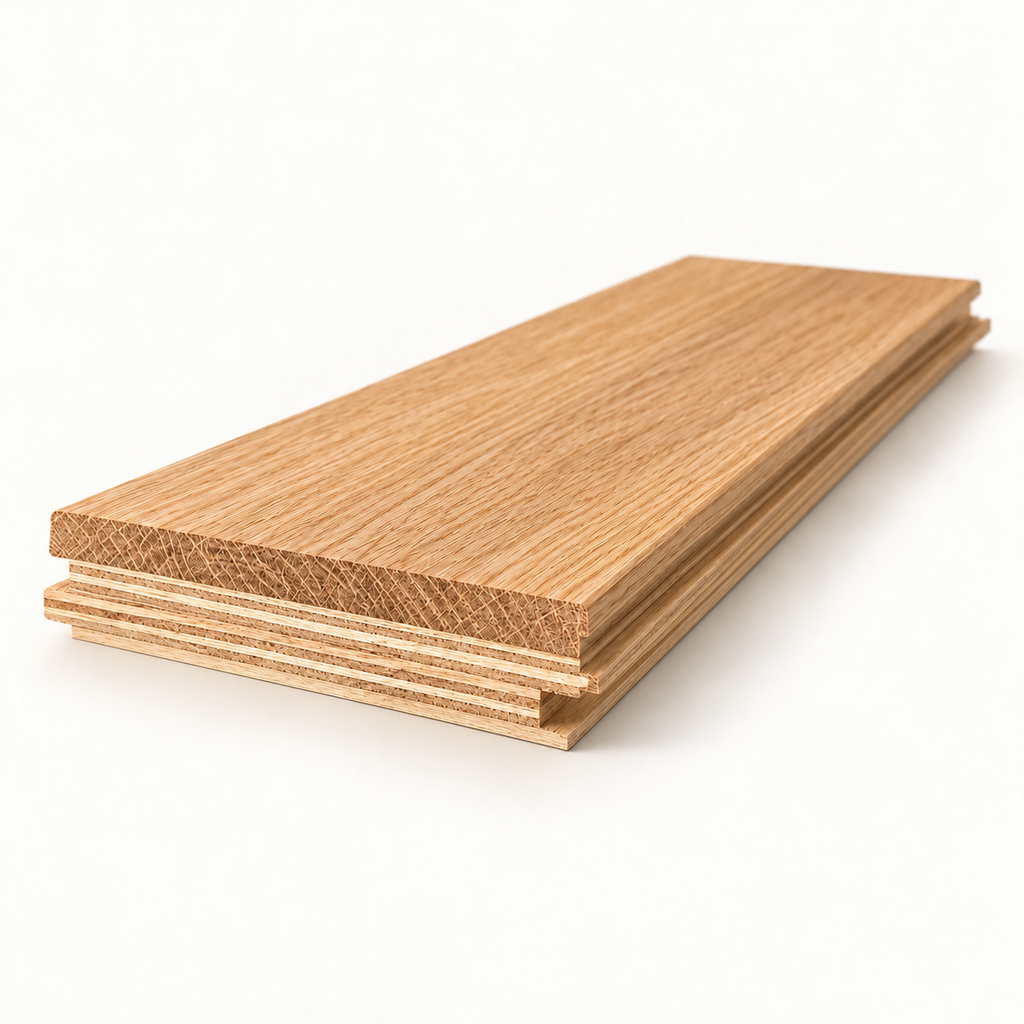
Engineered wood flooring combines a real wood surface layer with supporting layers beneath it. These may include a plywood core or a three-layer wood construction.
Both are real wood flooring. Engineered wood should not be confused with laminate flooring, which typically uses a printed decorative surface.
How Do They Compare?
| Consideration | أرضيات الخشب الصلب | أرضيات الخشب المصنعة |
|---|---|---|
| التشييد | One continuous piece of timber | Real wood surface over supporting layers |
| Seasonal movement | Generally more responsive to humidity changes | Generally offers greater dimensional stability |
| التثبيت | Depends on the board and subfloor specification | May allow glue-down, nail-down or floating installation, depending on the product |
| Renovation | Usable wood above the joint determines sanding potential | Surface-layer thickness and floor condition determine sanding potential |
| Project selection | Often considered for stable indoor environments | Often considered where stability and installation flexibility are priorities |
The layered construction of engineered flooring reduces expansion and contraction compared with solid wood. It does not eliminate movement altogether.
Greater Stability Does Not Mean Waterproof
Engineered flooring can offer an advantage where indoor humidity changes seasonally. However, ordinary engineered wood flooring should not be treated as a waterproof material.
Both constructions need protection from leaks, standing water and excessive wet cleaning. Spills should be removed promptly, and moisture problems should be addressed before installation.
For kitchens, below-ground rooms or other moisture-sensitive spaces, check the specific flooring’s approved applications and installation requirements. Bathrooms and wet areas require particular care: a general description such as “engineered wood” is not sufficient approval for use.
Installation: Specify the Complete System
The installation method should be confirmed before placing an order.
For engineered flooring, available methods may include bonding to the subfloor, mechanical fixing or floating installation. The correct choice depends on the product’s joint system and installation instructions.
Do not assume that every engineered board can be floated, or that adding underlay makes every concrete subfloor suitable. Subfloor condition, moisture control and the compatibility of the installation materials all need consideration.
For project procurement, request the installation instructions alongside the flooring specification so that the contractor can assess the proposed system.
Can Both Types Be Sanded and Refinished?
Refinishing potential depends on the actual board construction and its condition.
With engineered flooring, the thickness of the real wood surface is particularly important. Thin surface layers can limit or rule out full sanding. With solid flooring, the usable material above the joint—and any previous sanding—also matters.
Recoating an existing finish is different from sanding back to bare wood. A flooring professional should assess the floor before either treatment. Avoid specifying a guaranteed number of future sanding cycles based only on the labels “solid” or “engineered.”
What About Underfloor Heating?
Underfloor heating compatibility must be confirmed for the specific flooring product.
Approved systems may include requirements for the heating system, subfloor preparation, operating temperatures and installation method. Engineered construction alone does not establish compatibility, and underlay alone does not make an installation suitable.
Request written guidance from the flooring supplier before finalising the specification.
Compare Specifications Before Comparing Prices
For distributors and project buyers, a useful quotation comparison should include:
- Wood species and appearance grade
- Board dimensions and construction
- Surface-layer thickness for engineered flooring
- Surface finish and texture
- Joint system and approved installation method
- Project conditions and maintenance requirements
Compare products against the same requirements. A quotation for a narrow solid board and one for a wide engineered board may represent very different specifications.
Choosing Flooring for Your Project
Solid wood is worth considering when a continuous timber construction is a priority and the installation environment meets the product’s requirements.
Engineered wood is worth considering when dimensional stability and installation flexibility are important to the project.
At Chengzi Flooring, we supply solid wood and engineered hardwood flooring for distributors, contractors and project buyers. Share your preferred flooring style, estimated quantity, destination and site conditions with our team to discuss suitable specifications, samples and a quotation.